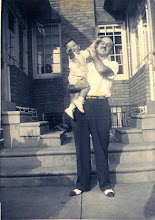
Rutted and cracked, stained with gum and takeout and tears, pounded by wayfarers, dancers and do-nothings, still, something in our pavements glitters—not with gold, as myth would have it, but with essence, as New York theology would confirm. Eau d’ ordeal, tincture of rush, elixir of anecdote. The Sidewalks of New York.
Everybody has a story. A scam, a mugging, a hustle. And, unsurprisingly, every story has a punch line. Why squander a good misadventure?
An elderly Jewish woman told me of exiting El Morocco years ago when an armed man emerging from the shadows warned her, in her words, “I have here such a big gun.” My daughter’s friend, Clement Hill, reacted to news of Lauren’s mugging by commenting on Facebook that he “didn't realize that mugging was still ‘a thing’… seems so 1980s,” then added, “I hope you told him he was being very passe." (That’s two punch lines!) Another friend, screenwriter Richard Potter followed with, "I barely touched you. You fell on your own."
I reported a new hustle weeks ago by a man who no doubt retrieved a container of food from a trash basket and worked his way up the street with it, deliberately running into people as if they weren’t looking where they were going, letting his ever-dwindling portion of food thud to the ground and then guilting his victims into compensating him with cash for a new meal.
Muggers aren’t noted for their humor, but scammers—you bet! Just last week, a perfectly average-looking man in his 30s, gesturing toward a nail salon with a quickie massage table visible through its storefront window, asked me from ten feet away, “Can you pay for me to get a massage in here?” When I shook him off, he called, “I’ll let you watch the expression on my face while I get it.”
My friend, raconteur Herb Graff, would have given him $10 for that line. That’s what Herb gave a panhandler who asked for $10 for “A down-payment on my co-op.” That’s what he gave the one soliciting money for “The United Negro Pizza Fund.”
Writer Tom Bisky describes a scammer who was, “and still is, in a class by himself. Ten years ago, on a corner of Rockefeller Plaza, he somehow managed to sell me a ‘free’ baseball cap for $10. I don't remember a single detail of his spiel. I just recall thinking that ten bucks didn't seem all that much for a sturdy-seeming baseball cap. Plus, I really wanted to get away from the guy, so it amounted to ‘hush’ money I was glad to pay. Today, if I were put in charge of giving a lifetime achievement award to New York's most brazen, balls-out scammer, he would win hands-down. From time to time, I pass the same Rock Plaza corner—and he's still there, with his baseball caps in hand. For at least a decade, he's been scamming royally at one of the nerve centers of New York tourism. In fact, he's a ‘nerve’ center unto himself, because he's never more than a few yards from one (or more) of New York's Finest. So, if any of us ever really gets this guy's number, we should retire it. Among Gotham's major-league scam artistes, he's like Ruth and DiMaggio rolled into one.”
Perhaps a sociologist could explain why crowds in our city dependably make a story better. Cindy Bigras relates that she was pick-pocketed on Madison Avenue during her lunch hour. When she caught the culprit and seized her wallet back, passersby “started bitching at me” for slowing down the foot traffic.
Linda Amiel Burns drew a better-natured crowd. “In the days when Bloomingdale’s had revolving doors, a man with a green raincoat pushed himself into my section, and in a split second I could feel that my handbag was lighter, reached into it and found my wallet was gone. The mugger had a partner who tried to steer me in another direction, but I saw the green raincoat and ran after the guy like an obsessed maniac. A crowd began to follow me as I kept screaming, "Give me back my wallet!" It did occur to me that he could turn around and shoot me, but nothing was going to deter me at this point. This guy represented every man who had ‘done me wrong,’ and I was crazed and kept running after him. Suddenly, he turned around, threw the wallet at me, and ran off. And the crowd cheered and applauded.”
And why not? It’s street theater. On the Sidewalks of New York.
Everybody has a story. A scam, a mugging, a hustle. And, unsurprisingly, every story has a punch line. Why squander a good misadventure?
An elderly Jewish woman told me of exiting El Morocco years ago when an armed man emerging from the shadows warned her, in her words, “I have here such a big gun.” My daughter’s friend, Clement Hill, reacted to news of Lauren’s mugging by commenting on Facebook that he “didn't realize that mugging was still ‘a thing’… seems so 1980s,” then added, “I hope you told him he was being very passe." (That’s two punch lines!) Another friend, screenwriter Richard Potter followed with, "I barely touched you. You fell on your own."
I reported a new hustle weeks ago by a man who no doubt retrieved a container of food from a trash basket and worked his way up the street with it, deliberately running into people as if they weren’t looking where they were going, letting his ever-dwindling portion of food thud to the ground and then guilting his victims into compensating him with cash for a new meal.
Muggers aren’t noted for their humor, but scammers—you bet! Just last week, a perfectly average-looking man in his 30s, gesturing toward a nail salon with a quickie massage table visible through its storefront window, asked me from ten feet away, “Can you pay for me to get a massage in here?” When I shook him off, he called, “I’ll let you watch the expression on my face while I get it.”
My friend, raconteur Herb Graff, would have given him $10 for that line. That’s what Herb gave a panhandler who asked for $10 for “A down-payment on my co-op.” That’s what he gave the one soliciting money for “The United Negro Pizza Fund.”
Writer Tom Bisky describes a scammer who was, “and still is, in a class by himself. Ten years ago, on a corner of Rockefeller Plaza, he somehow managed to sell me a ‘free’ baseball cap for $10. I don't remember a single detail of his spiel. I just recall thinking that ten bucks didn't seem all that much for a sturdy-seeming baseball cap. Plus, I really wanted to get away from the guy, so it amounted to ‘hush’ money I was glad to pay. Today, if I were put in charge of giving a lifetime achievement award to New York's most brazen, balls-out scammer, he would win hands-down. From time to time, I pass the same Rock Plaza corner—and he's still there, with his baseball caps in hand. For at least a decade, he's been scamming royally at one of the nerve centers of New York tourism. In fact, he's a ‘nerve’ center unto himself, because he's never more than a few yards from one (or more) of New York's Finest. So, if any of us ever really gets this guy's number, we should retire it. Among Gotham's major-league scam artistes, he's like Ruth and DiMaggio rolled into one.”
Perhaps a sociologist could explain why crowds in our city dependably make a story better. Cindy Bigras relates that she was pick-pocketed on Madison Avenue during her lunch hour. When she caught the culprit and seized her wallet back, passersby “started bitching at me” for slowing down the foot traffic.
Linda Amiel Burns drew a better-natured crowd. “In the days when Bloomingdale’s had revolving doors, a man with a green raincoat pushed himself into my section, and in a split second I could feel that my handbag was lighter, reached into it and found my wallet was gone. The mugger had a partner who tried to steer me in another direction, but I saw the green raincoat and ran after the guy like an obsessed maniac. A crowd began to follow me as I kept screaming, "Give me back my wallet!" It did occur to me that he could turn around and shoot me, but nothing was going to deter me at this point. This guy represented every man who had ‘done me wrong,’ and I was crazed and kept running after him. Suddenly, he turned around, threw the wallet at me, and ran off. And the crowd cheered and applauded.”
And why not? It’s street theater. On the Sidewalks of New York.


 Posts
Posts