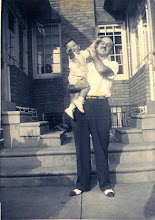
When Oscar Hammerstein died, in 1960, I remember reading that the lights of every Broadway theater would be dimmed at curtain time for one full minute, and thinking how wonderful that was—the ultimate curtain call—for one man to achieve such extraordinary recognition for a life in the theater and his contribution to the art of it. Since becoming a New Yorker, I’ve noted a number of such fitting testaments to men and women whose luster illuminated the theater world. But none moved me the way a tribute to a gift to New York did this past Tuesday evening, when Broadway’s lights were dimmed for Howard Kissel. Through the din of Times Square, I could hear his mellifluous speaking voice in his measured tones, rich with irony and warm with whimsy, as he audibly punctuated his graceful prose.
We’ve lost a cultural icon, an irreplaceable one. Broadway, New York, the world, can ill afford it. Howard knew opera and dance, theater for sure, music of all sorts, and a good film. He knew books and he knew art. And he spoke masterly in the language of all of these. He knew knowledge.
And he could tell a great Jewish joke. Sprinkled with Yiddish. Relishing one, from his lips or another’s, he could laugh quieter and more broadly—at the same time—than anyone I ever came across.
For years, Howard, dance critic Joe Mazo and I would join up and sit together at High Holiday services. Even in synagogue, Howard always seemed to have a better bead on things than we did. Perhaps it was a result of an early goal: you’re unlikely to find this in any theatrical who’s who, but Howard told me he initially wanted to be a Reform rabbi.
For many months over one of those years, we three met for dinner practically every Friday night. Initially, it was to discuss and dissect the topic beloved by us, the performing arts in New York, specifically everything we could cover (plus a few books). The evenings evolved into a notion that we could collaborate on the libretto of a musical, with one of us volunteering to do the primary research, another assigning himself to a working outline, and the third designated to start tracking down the rights. I don’t remember any of us ever producing anything we could even draw a pencil line through. After apologies and excuses as we pulled our chairs closer to the table each week, we plunged into what any three people in New York who love theater do best, “talking theater.”
Howard, whom I can’t imagine comfortable growing up in the Milwaukee of the 40s and 50s, told me he was looking through a book of Bettmann Archive photos when he came across one of a Lower East Side New York storefront shop (one of those entered by descending three stairsteps below the sidewalk), a sign above its store window bearing the proprietor’s name and the store’s merchandise—in Hebrew. “And I knew there was a place where I belonged,” he said.
More than Broadway lights have been dimmed by our loss of him. He’ll be missed. I'll miss him.
We’ve lost a cultural icon, an irreplaceable one. Broadway, New York, the world, can ill afford it. Howard knew opera and dance, theater for sure, music of all sorts, and a good film. He knew books and he knew art. And he spoke masterly in the language of all of these. He knew knowledge.
And he could tell a great Jewish joke. Sprinkled with Yiddish. Relishing one, from his lips or another’s, he could laugh quieter and more broadly—at the same time—than anyone I ever came across.
For years, Howard, dance critic Joe Mazo and I would join up and sit together at High Holiday services. Even in synagogue, Howard always seemed to have a better bead on things than we did. Perhaps it was a result of an early goal: you’re unlikely to find this in any theatrical who’s who, but Howard told me he initially wanted to be a Reform rabbi.
For many months over one of those years, we three met for dinner practically every Friday night. Initially, it was to discuss and dissect the topic beloved by us, the performing arts in New York, specifically everything we could cover (plus a few books). The evenings evolved into a notion that we could collaborate on the libretto of a musical, with one of us volunteering to do the primary research, another assigning himself to a working outline, and the third designated to start tracking down the rights. I don’t remember any of us ever producing anything we could even draw a pencil line through. After apologies and excuses as we pulled our chairs closer to the table each week, we plunged into what any three people in New York who love theater do best, “talking theater.”
Howard, whom I can’t imagine comfortable growing up in the Milwaukee of the 40s and 50s, told me he was looking through a book of Bettmann Archive photos when he came across one of a Lower East Side New York storefront shop (one of those entered by descending three stairsteps below the sidewalk), a sign above its store window bearing the proprietor’s name and the store’s merchandise—in Hebrew. “And I knew there was a place where I belonged,” he said.
More than Broadway lights have been dimmed by our loss of him. He’ll be missed. I'll miss him.


 Posts
Posts