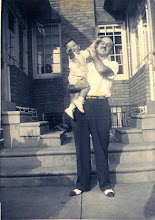
In 1981, I told Bashir Gemayel that he would be the next president of Lebanon August 23rd, 1982 , he was elected. On September 14th, 1982 , he was assassinated.
All the acclaim currently going to “Waltz with Bashir,” the frontrunner (fromIsrael
A voice-over in “Waltz with Bashir” tells us he was “a star, an idol, a prince…” Indisputable, but insufficient. An often literally nightmarish history of the 1982 Israeli-Palestinian conflict waged on the fields, streets and beaches of Lebanon, “Waltz with Bashir” is a hybrid animated documentary, a brilliant one. It is not a biography, and film has its limitations. Having known Bashir, having enjoyed an easy rapport with him and been stirred by him, I feel compelled to pick up where the film leaves off.
To meet Bashir was to be inspired by him. He was strong (to excess, according to his critics) whenLebanon ,
All the acclaim currently going to “Waltz with Bashir,” the frontrunner (from
A voice-over in “Waltz with Bashir” tells us he was “a star, an idol, a prince…” Indisputable, but insufficient. An often literally nightmarish history of the 1982 Israeli-Palestinian conflict waged on the fields, streets and beaches of Lebanon, “Waltz with Bashir” is a hybrid animated documentary, a brilliant one. It is not a biography, and film has its limitations. Having known Bashir, having enjoyed an easy rapport with him and been stirred by him, I feel compelled to pick up where the film leaves off.
To meet Bashir was to be inspired by him. He was strong (to excess, according to his critics) when
In beige business suit, dress shirt and tie when not in military fatigues, with boyish voice and cultured candor, he looked and sounded more like the best man at a wedding than the Commander-in-Chief of the 25,000-strong coalition Lebanese Forces and the emerging charismatic political leader on whose shoulders the future of Lebanon would barely have time to perch, much less rest.
Before he paid for his aspirations for his country with his own life, he paid a price even dearer—a car bomb intended for him took the life of his eighteen-month-old daughter, Maya. He stoically told me it was a "tribute" he was forced to pay, "the same as many Lebanese."
A Christian Maronite who sought to be president to
Christians and Moslems alike, Bashir was staunchly pro-Western, unfettered by Pan-Arabism, friendly to Israel and hostile to the Syrians and to the Palestine Liberation Organization. With his combination of intelligence, courage and confidence, he impressed me as having the potential to emerge not only as the leader the Arab world lacked and needed so badly, but also as a pivotal leader on the world stage. He was the only principal player in the Arab world with the imagination and the courage to fill the void left by Sadat. No one since has surfaced to change that.
The details of Bashir’s death are lurid and heartbreaking.
Chief of his nationalist Kataeb party, he routinely attended a weekly Tuesday afternoon meeting at a party headquarters in Beirut’s Ashrafieh neighborhood. As president-elect of Lebanon, he insisted on going “for the last time” before resigning his post. Habib Chartouni, an assassin in the employ of Syria, had family—by varying accounts, grandparents and/or a sister—living in the office’s building, where he had planted a mammoth TNT bomb. His urgent phone calls to them giving various excuses to leave the building failed—they lingered to get yet another glimpse of the beloved Bashir. Reports say the explosion lifted the building into the air before it collapsed into rubble.
No one would believe Bashir had met ill. Word spread that his attempted assassination had failed; their hero lived! Church bells pealed in celebration and soldiers fired into the air. His corpse, unearthed with many other victims, lay unidentified initially because his face was so badly crushed he was unrecognizable—until identity was established by the discovery of a nun’s letter to him in his pocket and a distinguishing finger ring. “They didn’t kill a man,” a woman is said to have screamed, “they killed a country.”
His disciples—for that in effect is what they were—were in shock and inconsolable. The voice-over of a former Israeli soldier in “Waltz with Bashir” coolly expresses, “I think they even felt an eroticism for him…. It was as if their wife had been murdered.” They took their revenge within days in the Sabra and Shatila refugee camps by massacring hundreds of Palestinian men, women and children. The Israel Defense Forces, ringing the outskirts of the camps, were accused not so much of complicity as of callous indifference. “It was obvious they’d avenge his death in some perverse way,” says the voice-over. In the waves of world-wide shock and revulsion that followed the exposure of the massacres, the thinking world, which had barely a chance to consider Bashir when he was alive, lost sight of Bashir and never got to consider what it lost. The magnitude of his death was dismissed as quickly as his body was interred.
Lebanon is still in the hands of ill-intentioned intruders—Syria, Hezbollah and other surrogates for Iran—not the Lebanese people. Two Arab countries flanking Israel, Egypt and Jordan, enjoy peace with her—but not Lebanon. As more Arab countries recognize Israel, more Arab countries will be forced to recognize Israel—and as a consequence, be uncustomarily faced with peace. The waltz, a mournful one, continues; the band plays on.


 Posts
Posts